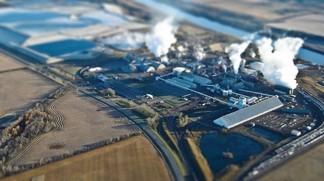
 Chemical industry generated many pollutions.
An experiment has demonstrated the role played by micro-organisms in the degradation - without oxygen - of a very common pollutant: vinyl chloride. The traces of human industrial activity persist deep inside the ground. And sometimes for a long time! In Switzerland alone, the Federal Office for the Environment records no less than 50,000 polluted sites, including 4000 that have been declared "contaminated" and require clean-up operations. This is a process that the Confederation is aiming to complete by 2025. But some pollutants, such as chlorinated hydrocarbons (CHCs), prove to be particularly insidious. A study recently conducted at EPFL has just shown that a process that aims to "boost" the bacteria in the ground by injecting nutrients in order to accelerate the depollution of groundwater aquifers risked instead extending the lifespan of a particularly carcinogenic substance, vinyl chloride (or chloroethene). This substance is derived from chlorinated solvents (such as perchlorethylene or trichlorethylene) that are still used today in a wide range of industrial procedures, from degreasing metal parts to the chemical cleaning of clothes. "These solvent types have been developed because they resist oxidation and are less dangerous to use than oil by-products because they do not burn", explains Christof Holliger, researcher at EPFL. "The problem is that they become much more harmful when they are not completely de-chlorinated". This is a side effect that went unnoticed until the 1980s. Previously there was no incentive for industry to exercise any particular caution in processing its chlorinated waste, which generally ended up in the sewage system or in the ground. What happens to the poison?
TO READ THIS ARTICLE, CREATE YOUR ACCOUNT
And extend your reading, free of charge and with no commitment.
Your Benefits
- Access to all content
- Receive newsmails for news and jobs
- Post ads