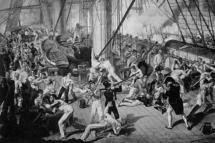
A painting of Nelson’s death at the Battle of Trafalgar.
Salt beef, sea biscuits and the occasional weevil were the foods endured by sailors during the Napoleonic wars, according to new Oxford University research. A new chemical analysis technique has allowed archaeologists to find out just how grim the diet of Georgian sailors really was. The team's findings, published in the American Journal of Physical Anthropology, also reveal how little had changed for sailors in the 200 years between the Elizabethan and Georgian eras. The research, led by Professor Mark Pollard from the School of Archaeology, focused on bones from 80 sailors who served from the mid-17th to the mid-18th centuries and were buried in Royal Naval Hospital cemeteries in Plymouth and Portsmouth. Professor Pollard said: 'An isotopic analysis of bone collagen from the recovered skeletons allowed us to reconstruct average dietary consumption. By comparing these findings to primary documentary evidence we can build a more accurate picture of life in Nelson's navy. In the late 18th century the Royal Navy employed 70,000 seamen and marines.
TO READ THIS ARTICLE, CREATE YOUR ACCOUNT
And extend your reading, free of charge and with no commitment.