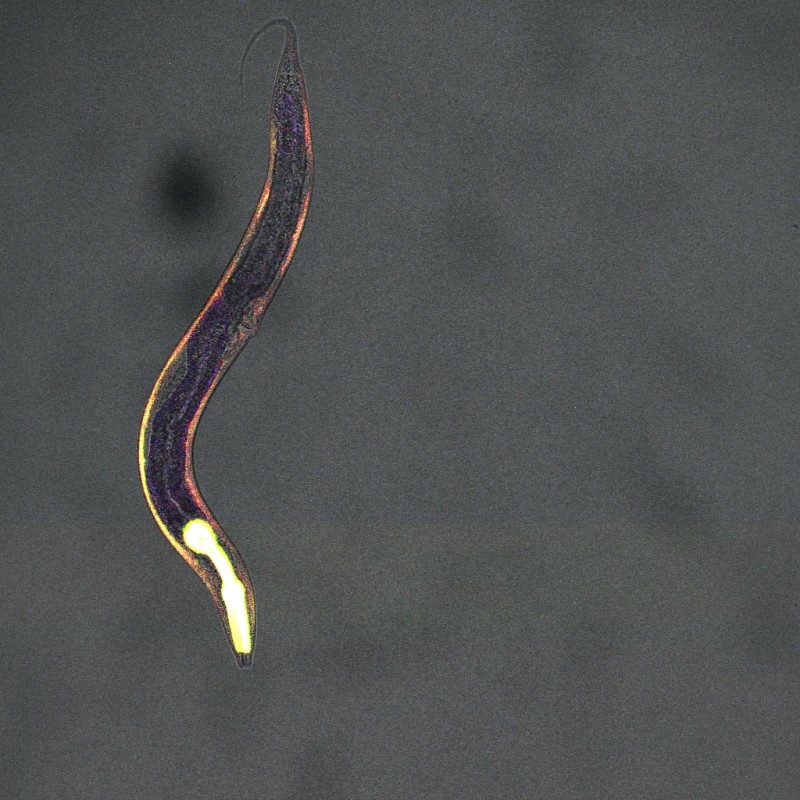
Microscope image of a C. elegans roundworm expressing a fluorescent hydrogen peroxide sensor in the body wall muscle cells, indicated in pink and yellow. A second fluorescent protein is expressed in the head region, shown in white. Image provided by Daniela Knoefler
ANN ARBOR, Mich.-Why do we age, and what makes some of us live longer than others? For decades, researchers have been trying to answer these questions by elucidating the molecular causes of aging. One of the most popular theories is that the accumulation of oxygen radicals over time might be the underlying culprit in aging. Oxygen radicals are chemically reactive molecules that can damage cellular components such as lipids, proteins and nucleic acids, resulting in "oxidative stress." The possible link between oxidative stress and aging has led to the proliferation of antioxidant products ranging from dietary supplements to anti-aging creams. However, the role of oxidative stress in aging is still controversial, and the effectiveness of these antioxidants is debatable. In a paper to be published online July 19 in the journal Molecular Cell, University of Michigan molecular biologist Ursula Jakob and her co-workers measured reactive oxygen species in worms and identified the processes affected by oxidative stress. Using the small roundworm C. elegans, a popular model organism for aging studies, they made several surprising observations. They found that these animals are forced to deal with very high levels of reactive oxygen species long before old age.
TO READ THIS ARTICLE, CREATE YOUR ACCOUNT
And extend your reading, free of charge and with no commitment.