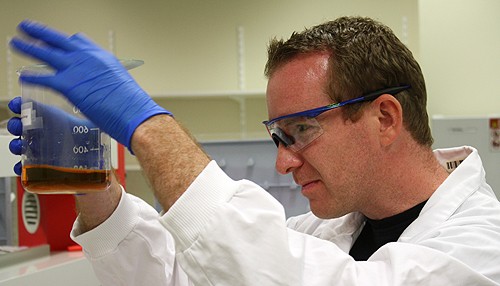
The cancer drug cisplatin could be significanly improved by gold nanoparticles, says Dr Nial Wheate.
Gold nanoparticles can be used as delivery vehicles for platinum anticancer drugs, improving targeting and uptake into cells, according to research published in this month's edition of the international journal Inorganic Chemistry . Researchers at the University of Sydney's Faculty of Pharmacy investigated the appropriateness of different sized gold nanoparticles as components of platinum-based drug delivery systems such as cisplatin. The researchers studied the cancer drug's controlled synthesis, reproducibility, consistency of drug loading and stability. According to Nial Wheate , senior lecturer in pharmaceutical chemistry and leader of the project, the effectiveness of the cancer drug cisplatin could be significantly improved by gold nanoparticles, which selectively pick up and drive the platinum-based drug into solid cancer tumours. Wheate says the team conducted multiple testing regimes on the gold nanoparticles: "For any new drug to get approval for human clinical trials, it must demonstrate not only efficiency but also the capability of being reproducibly manufactured and stable in storage," he says. "Developing and making a drug is a lot like building and designing a car. You have to test and retest it for durability and all the safety features.
TO READ THIS ARTICLE, CREATE YOUR ACCOUNT
And extend your reading, free of charge and with no commitment.