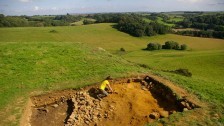
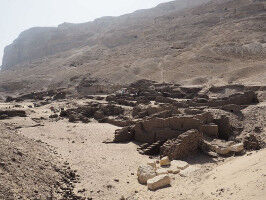
Excavations at Ham Hill, Somerset. Credit: Chris Evans / Cambridge Archaeological Unit.
A second season of excavations at Britain's biggest Iron Age hill-fort has uncovered remains of Roman weaponry, and the site of the first "ham stone" house. The fort's construction marked a major transformation of the landscape as a considerable area of farmland had to be abandoned." - —Chris Evans, Cambridge Archaeological Unit. Archaeologists are slowly piecing together a picture of what life was like in Britain's largest hill-fort, after a second season of excavations. The project, at Ham Hill in Somerset, is the most intensive excavation of the Iron Age fort ever undertaken, and involves researchers from both Cambridge and Cardiff universities. Stretching across more than 80 hectares, Ham Hill is by far the largest fort of its kind and one of the most important Iron Age sites in the country. Ironically, however, it is also one of the least understood, as its sheer size means that explaining its meaning and purpose is difficult. The current project aims to find out more and is taking place over three summers, ahead of the extension of a quarry which harvests "ham stone", a distinctive, honey-coloured stone which characterises many listed buildings across south England.
TO READ THIS ARTICLE, CREATE YOUR ACCOUNT
And extend your reading, free of charge and with no commitment.