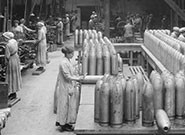
The common images of the First World War are of fighting men on the Western Front and in the Middle East, mighty battleships, airships, and flimsy aircraft. This exciting project, through the work of volunteers , will for the first time map the more subtle traces of the conflict that are still found in our towns and countryside.
The material remains of the First World War on the British Home Front will be investigated by researchers at the University of Bristol and the University of York, thanks to £39,500 funding from English Heritage. The material remains of the First World War on the British Home Front will be investigated by researchers at the University of Bristol and the University of York, thanks to £39,500 funding from English Heritage. The Home Front 1914-1918 and its Legacies will serve as a small-scale nine-month pilot for a future national public archaeology project to research and record the remaining traces of the First World War in Britain. The project will be managed by Nicholas Saunders of Bristol's Department of Archaeology and Anthropology and John Schofield of the University of York, with Emily Glass, also at Bristol, serving as project officer undertaking the research. The researchers will develop a methodology for use by volunteers to record the physical legacies of the First World War within their localities. Two test areas - Staffordshire and the Lower Lea Valley, to the north-east of London - will be investigated during the pilot. In Staffordshire, the researchers will work closely with the Historic Environment Record (HER) Services of Staffordshire County Council and the Stoke-on-Trent HER office, while in the Lower Lea Valley they will be collaborating with the Hertfordshire, Essex and Greater London HERs.
TO READ THIS ARTICLE, CREATE YOUR ACCOUNT
And extend your reading, free of charge and with no commitment.