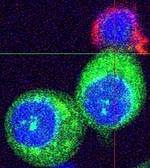
Image shows killer T-cells engaging and killing beta cells. The cells are stained for insulin in green, CD8 (a marker of killer T-cells) in red and with a blue nuclear stain to show the cell nucleus (the genetic material). Images courtesy of Susan Wong and Maja Wallberg.
Killer T-cells in the human body which help protect us from disease can inadvertently destroy cells that produce insulin, new University research has uncovered. The study provides the first evidence of this mechanism in action and could offer new understanding of the cause of Type 1 diabetes. Professor Andy Sewell, an expert in human T-cells from the School of Medicine worked alongside diabetes experts from King's College London to better understand the role of T-cells in the development of Type 1 diabetes. The team isolated a T-cell from a patient with Type 1 diabetes to view a unique molecular interaction which results in the killing of insulin-producing cells in the pancreas. "Type 1 diabetes is a result of the body's own immune system attacking and destroying the cells in the pancreas that manufacture the hormone insulin. Insulin controls blood sugar levels and a lack of insulin is fatal if untreated," said Professor Sewell. "The mechanism by which the body attacks its own insulin producing cells in the pancreas is not fully understood.
TO READ THIS ARTICLE, CREATE YOUR ACCOUNT
And extend your reading, free of charge and with no commitment.