New understanding of Antarctic’s weight-loss
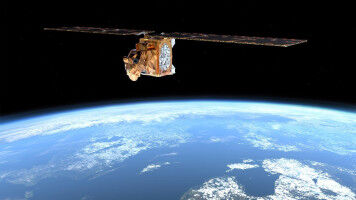
New data which more accurately measures the rate of ice-melt could help us better understand how Antarctica is changing in the light of global warming. New data which more accurately measures the rate of ice-melt could help us better understand how Antarctica is changing in the light of global warming. The rate of global sea level change is reasonably well-established but understanding the different sources of this rise is more challenging. Using re-calibrated scales that are able to 'weigh' ice sheets from space to a greater degree of accuracy than ever before, an international team including a leading Durham University expert, has discovered that Antarctica overall is contributing much less to the substantial sea-level rise than originally thought. Instead, the large amount of water flowing away from West Antarctica through ice-melt has been partly cancelled out by the volume of water falling onto the continent in the form of snow, suggesting some past studies have overestimated Antarctica's contribution to fast-rising sea levels. Using Gravity Recovery and Climate Experiment (GRACE) satellite data, the team calculated ice sheet mass loss by more accurately mapping and removing the mass changes caused by the flow of rock beneath Earth's surface. The findings published in the academic journal Nature, will increase our understanding of how Antarctica is changing, say the scientists.