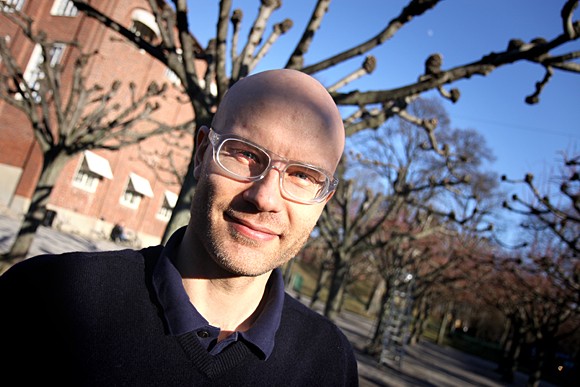
KTH associate Douglas Wikström is an expert in cryptography and cryptographic protocols.
Reception and service at central level for international students after arrival at KTH. For Master's students For Exchange students At the KTH Symposium, the director of the U.S. National Science Foundation explains how scientific co-operation with Sweden benefits American research. AIMday Image is a forum for knowledge exchange between academic and industrial scientists in the field of image analysis Welcome to KTH on March 7! KTH researchers have found major security flaws in commercial electronic voting systems used in the U.S. and Norway. They say the most serious weakness is a lack of a certifiable audit trail. "I can't understand how electronic voting systems based on questionable security can be in use for general elections," says Douglas Wikström, associate professor at KTH and a specialist in cryptography and cryptographic protocols. Wikström and his research colleague, Shahram Khazaei, have studied voting systems supplied by Civitas and Scantegrity, the latter currently in use for elections in the United States. Both systems are based on technologies developed by some of the world's top cryptographic scientists, including Ronald Rivest at MIT and RSA Laboratories, and David Chaum, a well-known inventor of numerous cryptographic protocols.
TO READ THIS ARTICLE, CREATE YOUR ACCOUNT
And extend your reading, free of charge and with no commitment.