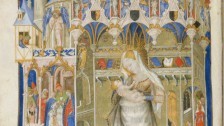
Painting from The Hours of Isabella Stuart Credit: Fitzwilliam Museum
Illuminated manuscripts are revealing their secret histories thanks to the application of techniques more commonly found in scientific laboratories. Art historical and linguistic research can take you a long way towards answering questions but scientific analysis can clinch arguments and dispel myths." - —Dr Stella Panayotova Fairy-tale pinnacles stretch to the horizon in an azure sky, scarlet flags flutter, an angel plays a golden horn, and the Madonna, shrouded in folds of tumbling ivory, serenely cradles her newborn baby. This painting (pictured) is one of the many that illuminate The Hours of Isabella Stuart , a sumptuous prayer book illustrated by a group of French painters in the 15th century. All that is known and speculated about the manuscript, which is part of the rich collection of illustrated manuscripts in Cambridge's Fitzwilliam Museum, has been pieced together from painstaking art historical analysis and circumstantial evidence. But much remains shrouded in mystery. Who designed the exceptionally rich and complex images? How were they to be used? Were they the creation of a workshop, with the Madonna painted by the workshop master? Or did several masters make guest appearances? Did the artists share materials and techniques? Where did the pigments come from? Now, thanks to an innovative project at the University of Cambridge, some of the hidden histories of the Book of Hours , and many other illuminated manuscripts, will be uncovered. Led by Stella Panayotova, Keeper of Manuscripts and Printed Books at the Fitzwilliam Museum, and Professor Stephen Elliott, from the Department of Chemistry, the MINIARE project is using scientific techniques to identify the composition of illuminations.
TO READ THIS ARTICLE, CREATE YOUR ACCOUNT
And extend your reading, free of charge and with no commitment.