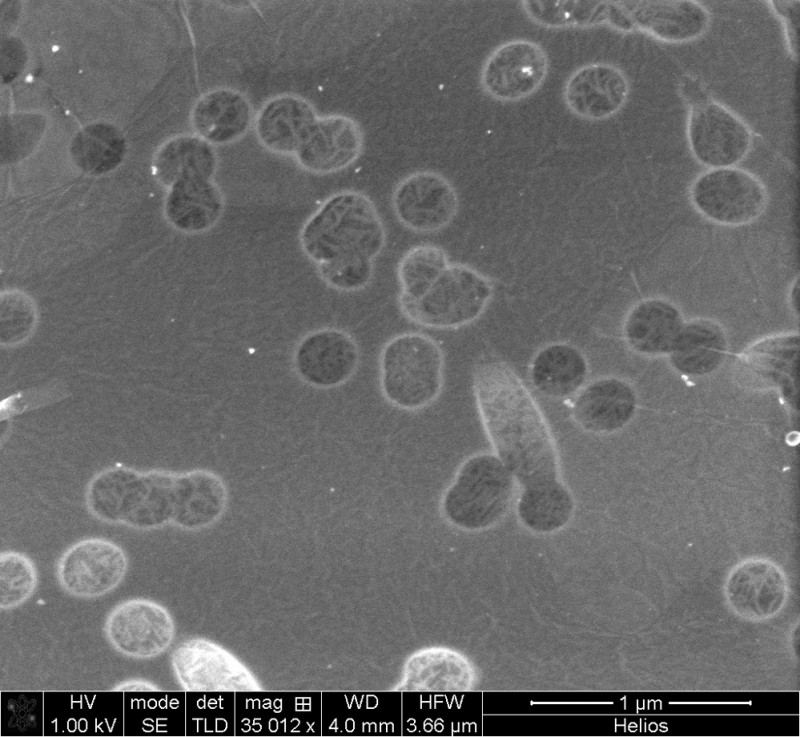
A scanning electron microscope image of the graphene covering pores in the polycarbonate track etch membrane. (MIT)
New membranes may filter water or separate biological samples. Much has been made of graphene's exceptional qualities, from its ability to conduct heat and electricity better than any other material to its unparalleled strength: Worked into a composite material, graphene can repel bullets better than Kevlar. Previous research has also shown that pristine graphene - a microscopic sheet of carbon atoms arranged in a honeycomb pattern - is among the most impermeable materials ever discovered, making the substance ideal as a barrier film. But the material may not be as impenetrable as scientists have thought. By engineering relatively large membranes from single sheets of graphene grown by chemical vapor deposition, researchers from MIT, Oak Ridge National Laboratory (ORNL) and elsewhere have found that the material bears intrinsic defects, or holes in its atom-sized armor. In experiments, the researchers found that small molecules like salts passed easily through a graphene membrane's tiny pores, while larger molecules were unable to penetrate. The results, the researchers say, point not to a flaw in graphene, but to the possibility of promising applications, such as membranes that filter microscopic contaminants from water, or that separate specific types of molecules from biological samples.
TO READ THIS ARTICLE, CREATE YOUR ACCOUNT
And extend your reading, free of charge and with no commitment.