The recent appearance and spread of bacteria that resist carbapenems is a serious and growing problem: potentially, we could be left with no effective antibiotic treatments for these infections. The emergence of bacteria that resist carbapenems is therefore very worrying.
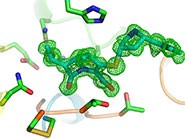
Scientists at the University of Bristol, together with collaborators at the University of Aveiro, Portugal, have solved the structure of an enzyme that breaks down carbapenems , antibiotics 'of last resort' which, until recently, were kept in reserve for serious infections that failed to respond to other treatments. Increasingly, bacteria such as E. coli are resisting the action of carbapenems by producing enzymes (carbapenemases) that break a specific chemical bond in the antibiotic, destroying its antimicrobial activity. Carbapenemases are members of the group of enzymes called beta-lactamases that break down penicillins and related antibiotics, but it has not been clear why carbapenemases can destroy carbapenems while other beta-lactamases cannot. Using molecular dynamics simulations, Professor Adrian Mulholland in the School of Chemistry and Jim Spencer in the School of Cellular and Molecular Medicine , showed how a particular type of carbapenemase enzyme reorients bound antibiotic to promote its breakdown and render it ineffective. Mulholland said: "The class of antibiotics called carbapenems, drugs related to penicillin, are increasingly important in healthcare as treatments for bacterial infections. Until recently, carbapenems were 'antibiotics of last resort' but the growing problem of resistance to other drugs in organisms like E. coli (the leading cause of bloodstream infections in the UK) means that carbapenems are now becoming first-choice antibiotics for these infections.
TO READ THIS ARTICLE, CREATE YOUR ACCOUNT
And extend your reading, free of charge and with no commitment.