Provided
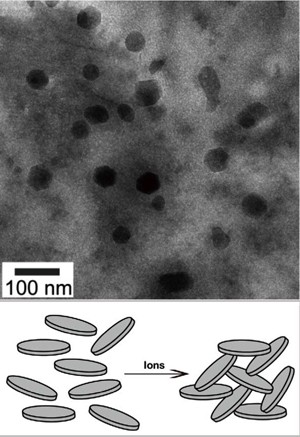
Clay - a seemingly infertile blend of minerals - might have been the birthplace of life on Earth. Or at least of the complex biochemicals that make life possible, Cornell biological engineers report in the Nov. 7 online issue of the journal Scientific Reports, published by Nature Publishing. "We propose that [in early geological history] clay hydrogel provided a confinement function for biomolecules and biochemical reactions," said Dan Luo, professor of biological and environmental engineering and a member of the Kavli Institute at Cornell for Nanoscale Science. In simulated ancient seawater, clay forms a hydrogel - a mass of microscopic spaces capable of soaking up liquids like a sponge. Over billions of years, Luo explained, chemicals confined in those spaces could have carried out the complex reactions that formed proteins, DNA and eventually all the machinery that makes a living cell work. Clay hydrogels could have confined and protected those chemical processes until the membrane that surrounds living cells developed, he said. The Luo group previously has used synthetic hydrogels as a "cell-free" medium for protein production. Fill the spongy material with DNA, amino acids, the right enzymes and a few bits of cellular machinery and you can make the proteins for which the DNA encodes, just as you might in a vat of cells. To make the process useful for producing large quantities of proteins, such as for drug manufacturing, you need a lot of hydrogel, so the researchers set out to find a cheaper way to make it. Postdoctoral researcher Dayong Yang noticed that clay formed a hydrogel. Why consider clay?
TO READ THIS ARTICLE, CREATE YOUR ACCOUNT
And extend your reading, free of charge and with no commitment.