Beum Jun Kim
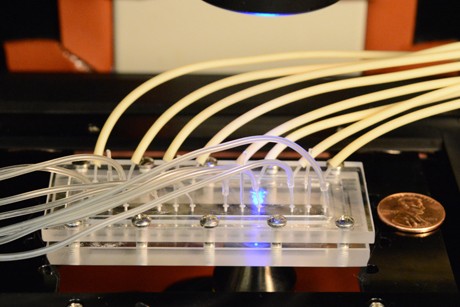
Fully understanding how cancer metastasizes, or moves from one place to another in the body, will save many lives. Cornell bioengineers are examining a critical step in the metastatic process using a microfluidic device that mimics the cancer cell microenvironment. Publishing online July 15 in PLOS One, a research group led by Mingming Wu, associate professor of biological and environmental engineering, has uncovered insights into how certain chemicals secreted by the body's immune system affect how breast cancer cells metastasize. Their device is a 3-D recreation of the chemical signaling cascade that can potentially lead to metastasis. The researchers looked at a malignant breast cancer cell line and studied two particular chemicals involved in cell migration, which is a step in the metastatic process. A chemokine, or signaling protein, called SDF-1alpha, is highly expressed in lymph nodes as well as other common breast cancer metastasis sites, including the lung, liver and bone marrow. Called a chemoattractant, it is a chemical that typically attracts immune cells to move toward it.
TO READ THIS ARTICLE, CREATE YOUR ACCOUNT
And extend your reading, free of charge and with no commitment.