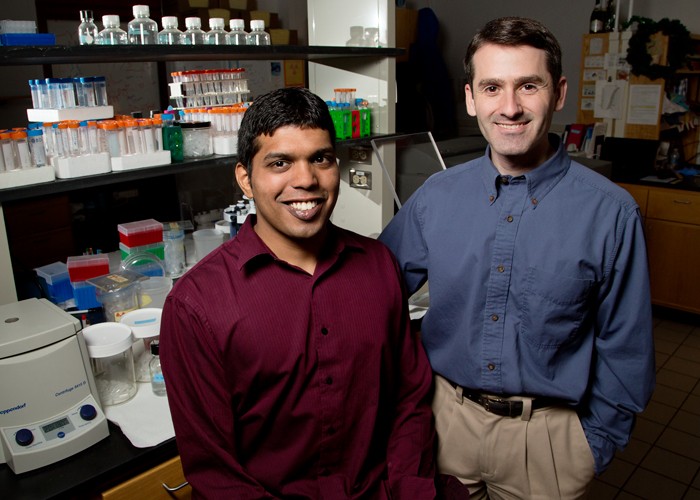
U. of I. chemists - Scott Silverman, right, and graduate student Jagadeeswaran Chandrasekar - synthesized a DNA catalyst that can perform a difficult reaction usually catalyzed by the protein enzyme phosphatase.
CHAMPAIGN, Ill. Illinois chemists have used DNA to do a protein's job, creating opportunities for DNA to find work in more areas of biology, chemistry and medicine than ever before. Led by Scott Silverman , a professor of chemistry at the University of Illinois at Urbana-Champaign, Ideally, researchers would like to be able to design and build new catalysts from scratch that can do exactly what they want. Many enzymes make small modifications to the building blocks of proteins, amino acids, which can create large changes in a finished protein. However, designing - or even modifying - protein enzymes is a very difficult task, thanks to their complexity and size. "Protein enzymes are the workhorses of biology," Silverman said. "They do most of the catalytic activity.
TO READ THIS ARTICLE, CREATE YOUR ACCOUNT
And extend your reading, free of charge and with no commitment.