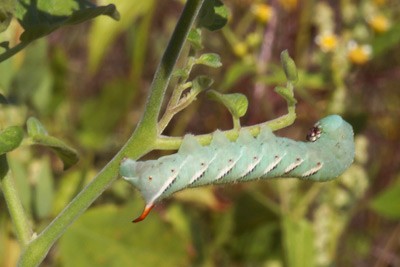
A hornworm caterpillar feeds on a wild tomato plant. How plants defend themselves against such enemies may depend on their reproductive strategy.
When it comes to mating, plants do it in many ways. On one end of the spectrum, there are plants that self-fertilize or mate with relatives (inbreeders); on the other are plants that mate with nonrelatives (outcrossers). The two types of mating styles have evolved very different defense strategies, Cornell researchers have found. Inbreeders' defense systems become activated only after their leaves have been eaten or damaged. Outcrossing species, on the other hand, have defense systems that are always turned on. The study of 56 species of nightshade was published online Feb. 20 in the Proceedings of the National Academy of Sciences.
TO READ THIS ARTICLE, CREATE YOUR ACCOUNT
And extend your reading, free of charge and with no commitment.