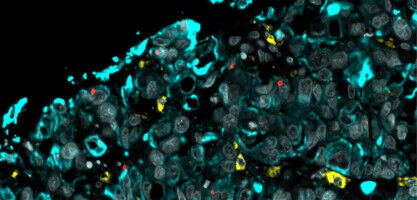
Researchers solve 20-year puzzle of how heart regulates its beat
A 20-year puzzle as to how the heart regulates contraction appears to have been solved by researchers from the University of Bristol. The findings, published in the journal Biophysics, paves the way to improving our understanding of what goes wrong when the heart fails. When the heart beats (contracts), the contractile machinery is switched on by an increase in calcium within the cell. This increase is produced by a release from intracellular stores activated by a small influx of calcium into the cell during the cardiac electrical signal - known as the action potential. This apparently simple process raised an important question, since the trigger signal was smaller than the release and both involve calcium how could the system be graded - since once the release is started it should overcome the trigger signal and be fully regenerative. A solution to this problem was found by Professor Mark Cannell from the University of Bristol's School of Physiology and Pharmacology and collaborators in the early 1990's - release takes the form of discrete microscopic calcium release events called 'calcium sparks'. It is the time-dependent recruitment of these events that allows the calcium release to be graded.