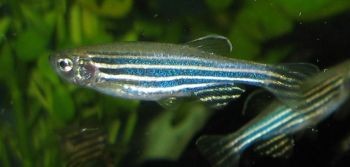
Zebrafish have fluorescent proteins designed to light up when synapses are active.
Senses of smell and vision interact in the eye, Sussex researchers find. New research by Sussex neuroscientists suggests that the interaction between smell and sight occurs not just in the brain, but starts in the eye. The study, carried out by Professor Leon Lagnado's research group in the School of Life Sciences and published in the journal Neuron , has furthered our understanding of how the senses interact with one another. The team of researchers, led by postdoctoral researcher Federico Esposti, used a special 'multiphoton' microscope to look into the retina of live zebrafish and observe messages sent to the brain in response to different visual stimuli and smells. They found that food-related smells 're-tune' the vision of zebrafish by making the retina more sensitive to moving objects, such as prey. Professor Lagnado says: "The way the brain processes information from one sense depends on the activity of other senses. For instance, we know that to listen closely to some music, it often helps to shut your eyes.
TO READ THIS ARTICLE, CREATE YOUR ACCOUNT
And extend your reading, free of charge and with no commitment.