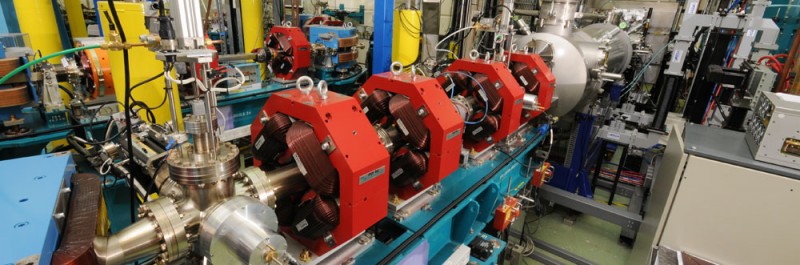
Image of ALICE courtesy of the STFC
Lancaster University is taking part in a UK research initiative which is bringing significant improvements in the diagnosis, treatment and prognosis of three of the world's most common forms of cancer. Prostate, cervical and oesophageal cancers can be treated successfully if diagnosed early enough but new techniques are needed to accurately diagnose the three cancer types much earlier than any current conventional tests. The research is a major project between four leading UK Universities and three NHS hospital trusts, will be carried out at the Science and Technology Facilities Council's (STFC) pioneering ALICE accelerator facility. ALICE is a light source of unprecedented brilliance and the most powerful source of terahertz light in Europe. Terahertz light has a short frequency -occupying the middle ground between microwaves and infrared light waves. The instruments on the ALICE accelerator will enable the team to look at cancer cells in a way that has never been done before. This will reveal, in extraordinary detail, the character and chemical processes that underlie the malignant behaviour of these three cancers, which will mean real developments in diagnosis and the development of therapies.
TO READ THIS ARTICLE, CREATE YOUR ACCOUNT
And extend your reading, free of charge and with no commitment.