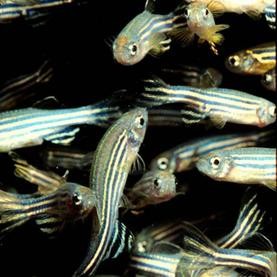
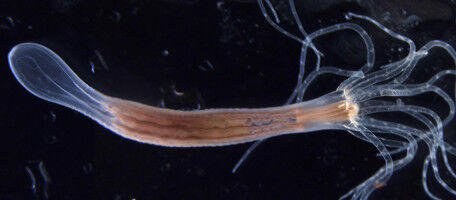
(top) zebrafish (bottom) an image of the left and right sided habenular nuclei of larval
zebrafish showing left/right structural asymmetries in the processes of
neurons (pink) and their connections (blue). Credit: Ana Faro/Tom Hawkins/Steve Wilson/UCL
Fish that have symmetric brains show defects in processing information about sights and smells, according to the results of a new study into how asymmetry in the brain affects processing of sensory information. It's widely believed that the left and right sides of the brain have slightly different roles in cognition and in regulating behaviour. However, scientists don't know whether these asymmetries actually matter for the efficient functioning of the brain. Now, a team from UCL and KU Leuven, Belgium has shown that, in zebrafish at least, loss of brain asymmetry can have significant consequences on sensory processing, raising the possibility that defects in the development of brain functions on either the left or right on the brain could cause cognitive dysfunction. The study is published today in Current Biology . Professor Steve Wilson, senior author of the study from the UCL Department of Cell & Developmental Biology, said: "We don't know whether asymmetries actually matter for the efficient functioning of the brain. For instance, if your brain was symmetric, would it work any less well than it normally does? "This is potentially an important issue as brain-imaging studies in various neurological conditions have shown alterations in normally asymmetric patterns of neuronal activity." In their study the team used two-photon high resolution microscopy to image the activity of individual neurons in a part of the brain called the habenulae in larval zebrafish.
TO READ THIS ARTICLE, CREATE YOUR ACCOUNT
And extend your reading, free of charge and with no commitment.