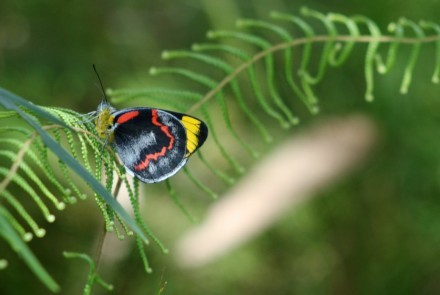
Photo courtesy of Martin Westgate.
Species could be going extinct right under the noses of scientists without them realising, researchers have found. Dr Martin Westgate from the Fenner School and Environment and Society led the group that concluded that methods for measuring the full gamut of animal species in a particular location are flawed. This means that efforts to protect endangered species may not be as effective as they could be. "Our study shows methods for measuring biodiversity are built on assumptions that do not hold in all circumstances, and this might lead to poor environmental decisions," said Dr Westgate, lead author of the paper published in Nature. "For example, poor measurement might cause us to think that biodiversity is stable or increasing, when in fact some species are in decline." To date around 1.5 million species have been described on Earth, but many more remain undocumented. Estimates of the total number of species on our planet vary widely, but have been as high as 100 million species, any of which could hold the key to a new cancer cure or painkiller. Without knowing where these species can be found, preventing them from going extinct can be difficult, or even impossible.
TO READ THIS ARTICLE, CREATE YOUR ACCOUNT
And extend your reading, free of charge and with no commitment.