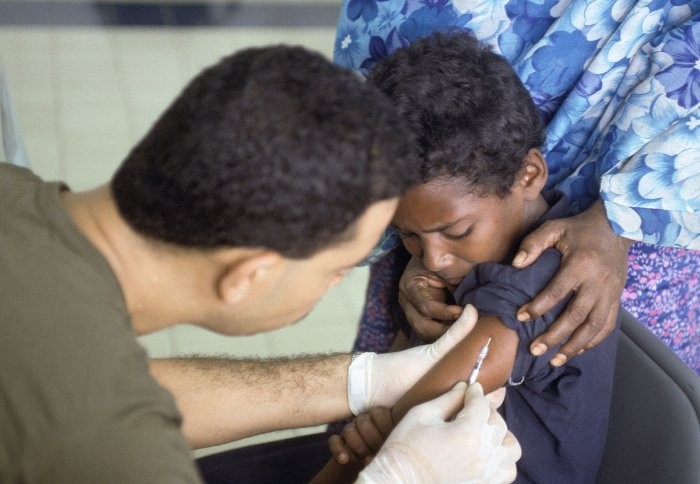
A Somali boy receives a polio vaccination in Mogadishu. Photo: PV2 Andrew W. McGalliard
Re-introducing a type of polio vaccine that fell out of favour in the 1960s could hasten eradication of the disease, according to new research. The study, by Imperial College London and the Christian Medical College in Vellore, India, suggests that the injected polio vaccine (IPV), which is rarely used today in countries affected by polio, could provide better and longer lasting protection against infection if used in combination with the more commonly used live oral polio vaccine (OPV). The findings are published today in The Lancet . Vaccination protects an individual against contracting polio, but they can still be infected by the virus, which replicates in the gut and can be passed to others through with infected faeces. This has led to serious polio outbreaks in Asia, Africa and Europe over the last 10 years and is hampering efforts to eradicate the disease. This implies that the IPV could be used to boost immunity in people travelling from or to polio-infected countries, such as Afghanistan, Pakistan and Nigeria. Most vaccination campaigns use multiple doses of OPV that provide some gut immunity, although this wanes over time.
TO READ THIS ARTICLE, CREATE YOUR ACCOUNT
And extend your reading, free of charge and with no commitment.