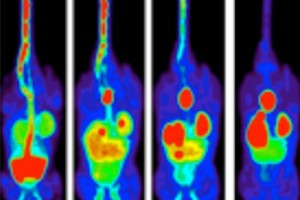
New method could lead to clearer and better quality images on PET scans
23 Apr 2014 Manchester scientists have improved a way of analysing how cancer spreads and how effective drugs are at killing the cells. A team from The University of Manchester - part of the Manchester Cancer Research Centre - have found a new method to more efficiently manufacture a chemical used to monitor cancer cells. The number of cells within tissue is controlled through apoptosis - a process where cells shrink and their components break up, also known as programmed cell death. Cancer is often characterised by a disruption to the normal process of this cell death. Being able to study this process accurately would allow doctors to more effectively diagnose and monitor cancer and to test and develop new treatments designed to kill cancer cells. Ideally, cell death would be measured non-invasively to avoid surgery and current methods are focused on using radioactive tracers - molecules that are taken up in regions of tissue where cells are breaking apart as they die. These tracers release radiation that can be detected using a scanner.
TO READ THIS ARTICLE, CREATE YOUR ACCOUNT
And extend your reading, free of charge and with no commitment.