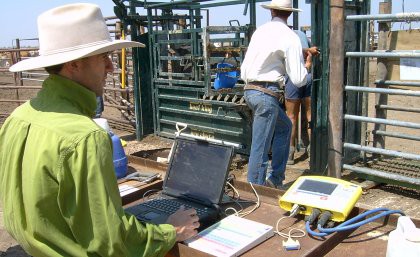
The CashCow project demonstrated the potential of electronic monitoring of herd performance
Meat & Livestock Australia is funding new University of Queensland research aimed at reducing foetal and calf loss in beef cattle breeding herds across northern Australia. UQ School of Veterinary Science Professor Michael McGowan said the University had collaborated on research with MLA over many years, and the new $273,000 study would build on the findings from the $2.47 million MLA-funded CashCow project recently completed by researchers from the School of Veterinary Science, the Queensland and Northern Territory governments, Outcross Performance Pty Ltd, Ausvet, and cattle veterinarians and commercial beef cattle producers. "The new project will focus on identifying current and potential new management practices that target key intervention points where we can reduce losses between confirmed pregnancy and weaning," Professor McGowan said. "The CashCow project investigated the fertility of more than 78,000 cows in 142 breeding mobs from 72 commercial enterprises across northern Australia over three to four years. "The project demonstrated that high-quality research can be conducted on commercial beef cattle properties. "The main thrust was to identify major factors affecting the likelihood of cows becoming pregnant, and why some pregnant cows successfully weaned their calves while others failed to do so." To better understand the link between herd productivity and reproduction, researchers developed new measures of annual liveweight production from breeding herds such as "kilograms weaned per cow" and determined production rates by broad geographic region.
TO READ THIS ARTICLE, CREATE YOUR ACCOUNT
And extend your reading, free of charge and with no commitment.