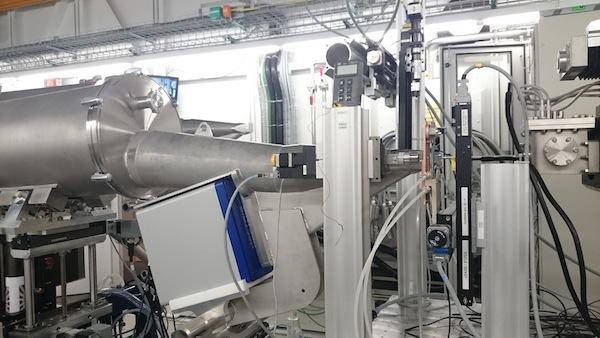
The PSI synchrotron radiation facility in Switzerland. To the left is the beamline that sends out the X-rays. The sample is attached to the small copper plate slightly to the right, and in the right-hand corner is the detector. PHOTO: Jenny Andersson
The PSI synchrotron radiation facility in Switzerland. To the left is the beamline that sends out the X-rays. The sample is attached to the small copper plate slightly to the right, and in the right-hand corner is the detector. PHOTO: Jenny Andersson Researchers at the Faculty of Science at Lund University in Sweden can now explain how the properties of the skin change depending on the environment. The new findings explain, among other things, why people don't dehydrate in dry air. The research results can also be used in the cosmetic and pharmaceutical industry to make substances penetrate the skin more effectively. The outer layer of skin can be described as a thin barrier - a kind of film that changes its properties and allows more or less water penetrate its surface, depending on whether the surrounding air is moist or dry.
TO READ THIS ARTICLE, CREATE YOUR ACCOUNT
And extend your reading, free of charge and with no commitment.