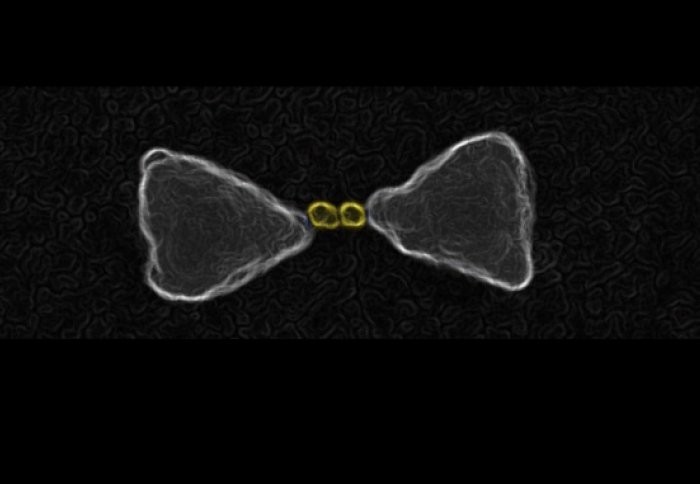
Gold nanoparticles chemically guided inside the hot-spot of a larger gold bow-tie nanoantenna
Using sunlight to drive chemical reactions, such as artificial photosynthesis, could soon become much more efficient thanks to nanomaterials. This is the conclusion of a study published today led by researchers in the Department of Physics at Imperial College London, which could ultimately help improve solar energy technologies and be used for new applications, such as using sunlight to break down harmful chemicals. Sunlight is used to drive many chemical processes that would not otherwise occur. For example, carbon dioxide and water do not ordinarily react, but in the process of photosynthesis, plants take these two chemicals and, using sunlight, produce oxygen and sugar. By using these materials we can revolutionize our current capabilities for storing and using sunlight. Dr Emiliano Cortés The efficiency of this reaction is very high, meaning much of the energy from sunlight is transferred to the chemical reaction, but so far scientists have been unable to mimic this process in manmade artificial devices. One reason is that many molecules that can undergo chemical reactions with light do not efficiently absorb the light themselves.
TO READ THIS ARTICLE, CREATE YOUR ACCOUNT
And extend your reading, free of charge and with no commitment.