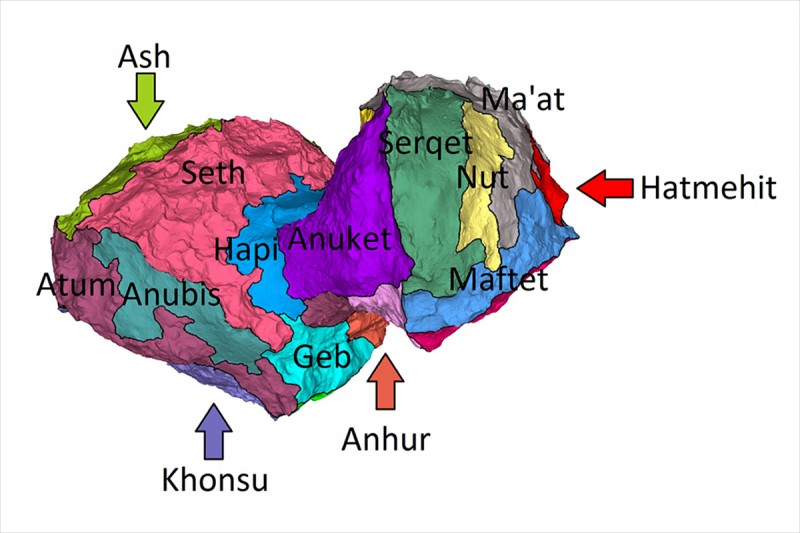
High-resolution 3D representation of the comet’s surface: The MiARD project’s evaluation of data from the Rosetta mission has led to a more detailed and consistent definition of geo-morphological regions on "Chury", also thanks to the OSIRIS camera with participation of the University of Bern. Credit: Nicolas Thomas, University of Bern
The MiARD project (Multi-instrument Analysis of Rosetta Data) was a 30-month international research project led by the University of Bern to make the best use of the vast amount of data produced by the Rosetta mission. The most important results, models and an artistic project on MiARD have now been presented. The Rosetta spacecraft has already made history: Rosetta's mission took twelve years including notable firsts like the first orbit of a comet (and for 2 years no less) and, for the first time placing a lander on a comet surface. After its last signal on September 30, 2018 at 1:30 p.m. the spectacular mission had come to an end, with Rosetta undergoing a controlled crash on "its" comet Churyumov-Gerasimenko. The ROSINA instrument from Bern had been taking measurements right until the very end. The controlled crash was far from the end of the work for the scientists involved. The international research project MiARD under the direction of Nicolas Thomas, Professor at the Physics Institute of the University of Bern and member of the Center for Space and Habitability CSH sought, between March 2016 and August 2018, to make the best use of the Rosetta data by combining complementary datasets from different instruments, using a holistic approach to develop and test numerical models.
TO READ THIS ARTICLE, CREATE YOUR ACCOUNT
And extend your reading, free of charge and with no commitment.