Watch out, cork! Sensor developed for cork taste in wine
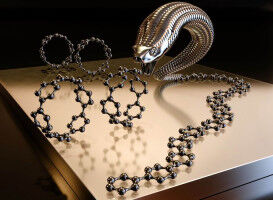
The molecule responsible for the cork taste in wine can now be clearly detected: With the newly developed sensor, the most common wine defect can already be detected in traces. Other potential applications include the detection of pesticides and explosives. This is shown in a recently published study by researchers at the University of Freiburg with the support of the University of Bordeaux. If a wine has 'cones', it is usually the cork that releases the corresponding molecules. These often come from fungicides with which the cork oak has been treated. With the help of a sponge-like, porous supramolecular network, these cone molecules can be 'captured'. As soon as such a substance is present and has settled in the pore of the sensor, it gives an optical signal.

Links
Translation by myScience