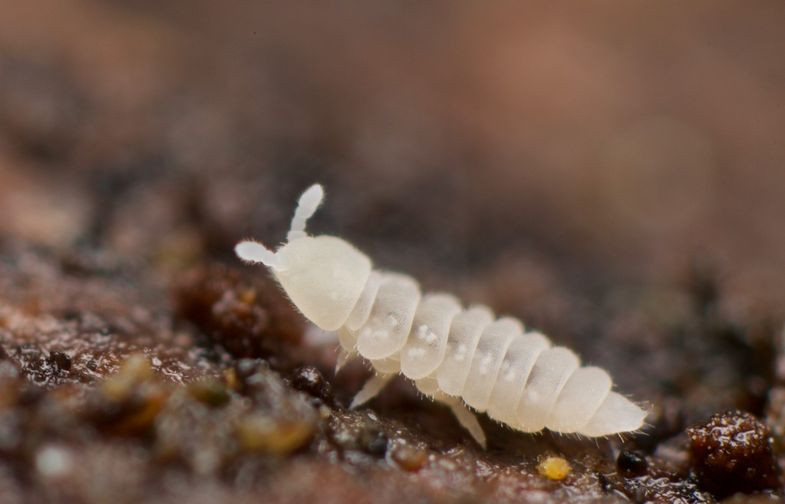
Springtails like Kalaphorura burmeisteri play a key role as decomposers worldwide. Chemicals reduce their species richness and abundance significantly. Photo: Andy Murray
Springtails like Kalaphorura burmeisteri play a key role as decomposers worldwide. Chemicals reduce their species richness and abundance significantly. Photo: Andy Murray Declines in the diversity and abundance of decomposers explain reductions in plant decay rates under the influence of chemical stressors, but not added nutrients. These are the new insights of a study published in the open access journal eLife. The global meta-analysis conducted by researchers at the German Centre for Integrative Biodiversity Research (iDiv), Leipzig University (UL) and the University of Namur in Belgium highlights the main anthropogenic effects on the biodiversity and functioning of ecosystems, and thus helps predicting the fate of different ecosystems around the world. Plant litter decomposition is a major ecosystem function, linking plant biomass to carbon stocks in the soil and atmosphere, and releasing nutrients including nitrogen and phosphorus that influence soil biodiversity. Global change factors such as chemical stressors and nutrient additions can change the decomposition ability of soil species and thereby the plant decay rates.
TO READ THIS ARTICLE, CREATE YOUR ACCOUNT
And extend your reading, free of charge and with no commitment.