Topological materials exhibit strange electron behaviours
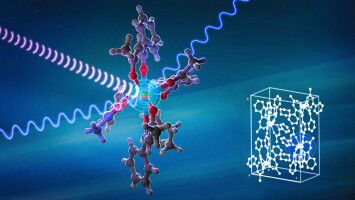
Topological materials exhibit strange electron behaviours - Topological materials are a new class of materials that could enable completely new types of electronic components and superconductors. In topological materials, electrons can behave differently than in conventional materials. The extent of these "exotic" phenomena depends on the so-called Chern number. New experiments have now shown that the theoretically predicted maximum value of the Chern number can be reached and even controlled in a real material. When the Royal Swedish Academy of Sciences awarded the Nobel Prize in Physics 2016 to David Thouless, Duncan Haldane and Michael Kosterlitz, they lauded the trio for having "opened the door on an unknown world where matter can assume strange states". Far from being an oddity, the discoveries of topological phase transitions and topological phases of matter, to which the three theoreticians have contributed so crucially, has grown into one of the most active fields of research in condensed matter physics today. Topological materials hold the promise, for instance, to lead to novel types of electronic components and superconductors, and they harbour deep connections across areas of physics and mathematics.
TO READ THIS ARTICLE, CREATE YOUR ACCOUNT
And extend your reading, free of charge and with no commitment.