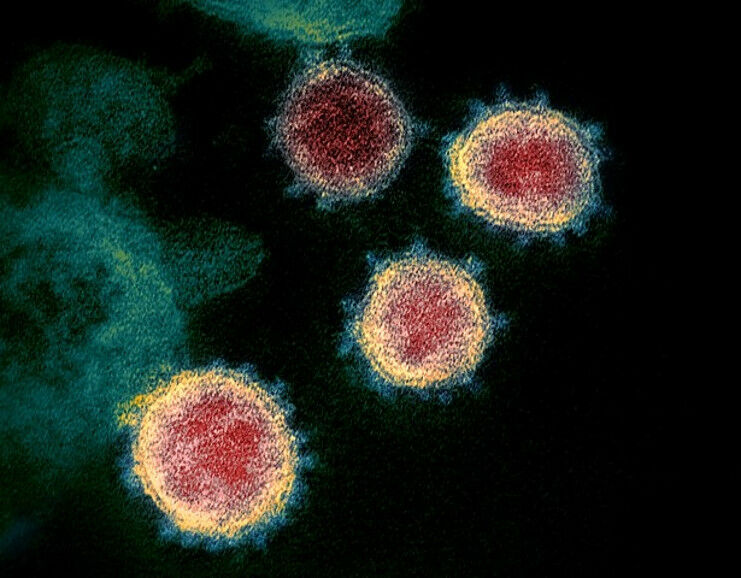
Image: NIAID-RML.
Image: NIAID-RML. A team consisting of physicists from the University of Amsterdam and medical researchers from the Amsterdam UMC and the Cardiology Centers of the Netherlands, has investigated the potential role of small aerosol droplets in the transmission of the coronavirus - an issue that has been under much debate recently. The researchers conclude that in many practical circumstances, aerosol transmission is not very efficient, but that riskier situations, in particular in poorly ventilated spaces or with superspreader individuals, can also occur. The research was carried out by physicist Daniel Bonn and his research group (UvA-IoP) together with medical researchers Aernout Somsen (CCN), Lia van der Hoek and Reinout Bem (Amsterdam UMC). The findings were published in Physics of Fluids this week. The risk of microdroplets. A key way in which the coronavirus can be transmitted, is via the inhalation of aerosols, droplets that are contaminated by the virus.
TO READ THIS ARTICLE, CREATE YOUR ACCOUNT
And extend your reading, free of charge and with no commitment.