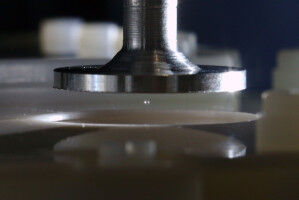
Oxygen bubbles produced on an electrocatalyst during water splitting. (Photograph: ETH Zurich / Matthias Frei)
Oxygen bubbles produced on an electrocatalyst during water splitting. (Photograph: ETH Zurich / Matthias Frei) - Splitting water into hydrogen and oxygen is an important chemical reaction, especially considering that the use of hydrogen as an energy source in sustainable mobility in the future. An international research team has now decoded how one of the catalysts used in this reaction works. Hydrogen is a key element for achieving sustainable mobility in the future, especially "green" hydrogen produced by splitting water using renewable power. In fuel cells, hydrogen can be used in chemical reactions to generate electrical energy, which in turn can power electric motors. It is also used in the production of synthetic liquid fuels. The process of using electricity to split water (electrolysis) involves two reactions that cannot take place independently: the formation of hydrogen at one electrode and oxygen at the other.
TO READ THIS ARTICLE, CREATE YOUR ACCOUNT
And extend your reading, free of charge and with no commitment.