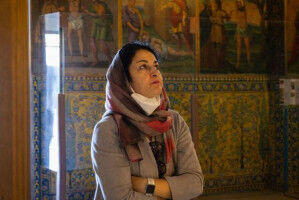
In a new book, anthropologist Tanya Lurhmann explores how religious practices and narratives can create deep, positive changes for the people who engage in them. (Image credit: Nikki Ross-Zehnder)
In a new book, anthropologist Tanya Lurhmann explores how religious practices and narratives can create deep, positive changes for the people who engage in them. (Image credit: Nikki Ross-Zehnder) - Creating a relationship with a supernatural other takes effort that can lead to meaningful change, says Stanford anthropologist Tanya Luhrmann. People who believe their God or gods are real, even if the existence of those supernatural beings can't be empirically proven, have long fascinated and confounded scientists. In a new book, Stanford anthropologist Tanya Luhrmann explores the intersection of religion and science, linking profound religious faith to beneficial, scientifically proven practices like mindfulness and cognitive behavioral therapy. In How God Becomes Real: Kindling the Presence of Invisible Others (Princeton University Press, 2020), Luhrmann explains that religious practices and narratives can create deep, positive changes for the people who engage in them. "Prayer is a lot like cognitive behavioral therapy," Luhrmann said. "It's a way you attend to your own inner experience, let go of distracting thoughts and focus on more positive thoughts.
TO READ THIS ARTICLE, CREATE YOUR ACCOUNT
And extend your reading, free of charge and with no commitment.