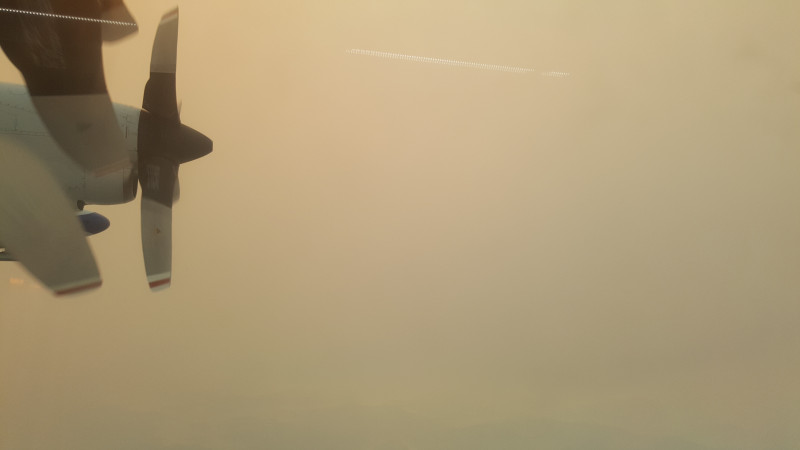
A view of the smoke from inside the C-130 research aircraft operated by the National Science Foundation and the National Center for Atmospheric Research. Brett Palm/University of Washington
A view of the smoke from inside the C-130 research aircraft operated by the National Science Foundation and the National Center for Atmospheric Research. Brett Palm/University of Washington Wildfires burning in the West affect not only the areas burned, but the wider regions covered by smoke. Recent years have seen hazy skies and hazardous air quality become regular features of the late summer weather. Many factors are causing Western wildfires to grow bigger and to generate larger, longer-lasting smoke plumes that can stretch across the continent. An analysis led by the University of Washington looks at the most detailed observations to date from the interiors of West Coast wildfire smoke plumes. The multi-institutional team tracked and flew through wildfire plumes from the source to collect data on how the chemical composition of smoke changed over time. A resulting paper, published Nov.
TO READ THIS ARTICLE, CREATE YOUR ACCOUNT
And extend your reading, free of charge and with no commitment.