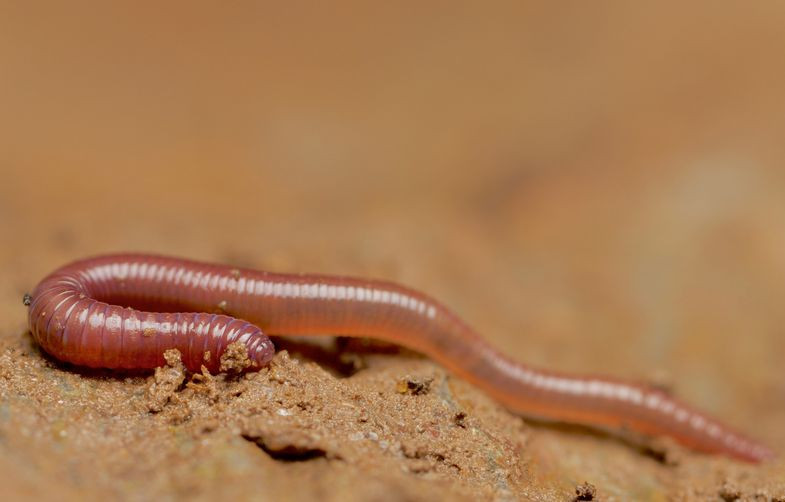
Earthworms are among the most well-known soil dwellers - but we know very little about many other soil organisms. Photo: Andy Murray
Earthworms are among the most well-known soil dwellers - but we know very little about many other soil organisms. Photo: Andy Murray Soils harbour a substantial part of the world's biodiversity, yet data on the patterns and processes taking place below ground does not represent all relevant ecosystems and taxa. For example, tropical and subtropical regions largely remain a blind spot when it comes to soil biodiversity. This is one of the results of a new study published and led by scientists from the German Centre for Integrative Biodiversity Research, the Martin Luther University Halle-Wittenberg and Leipzig University. Soils contribute to many crucial ecosystem functions and services including climate regulation, nutrient cycling, and food production. To support their conservation, it is essential to know which macroecological patterns are related to the functioning of soil organisms - only then can we understand the effects of global change drivers. Such analyses need to represent the diversity of environmental conditions that can be found worldwide.
TO READ THIS ARTICLE, CREATE YOUR ACCOUNT
And extend your reading, free of charge and with no commitment.