1/2 images Niklas Luhmann in the lab Copyright: Romana Maalouf Photography Copyright: Romana Maalouf Photography
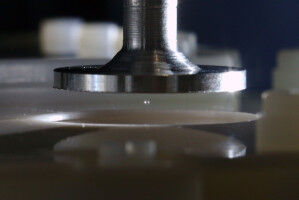
1/2 images Niklas Luhmann in the lab Copyright: Romana Maalouf Photography Copyright: Romana Maalouf Photography - Using an ultra-thin gold layer, scientists at TU Wien (Vienna) succeeded in creating an almost optimal infrared absorber. Possible applications range from astrophysics to virus detection. Infrared detectors play an important role in research: many molecules absorb electromagnetic radiation in the infrared range in a very characteristic way. Just like people can be identified by their fingerprints, molecules can be identified by their infrared spectrum. Infrared spectroscopy is used in many different areas - from astrophysics to environmental analysis to the search for viruses. For this method to work, it must be possible to detect even tiny doses of infrared radiation. Therefore, a material is needed that absorbs as much of the radiation as possible.
TO READ THIS ARTICLE, CREATE YOUR ACCOUNT
And extend your reading, free of charge and with no commitment.