Researchers at the University of Stuttgart develop miniature laboratory the size of the tip of a needle
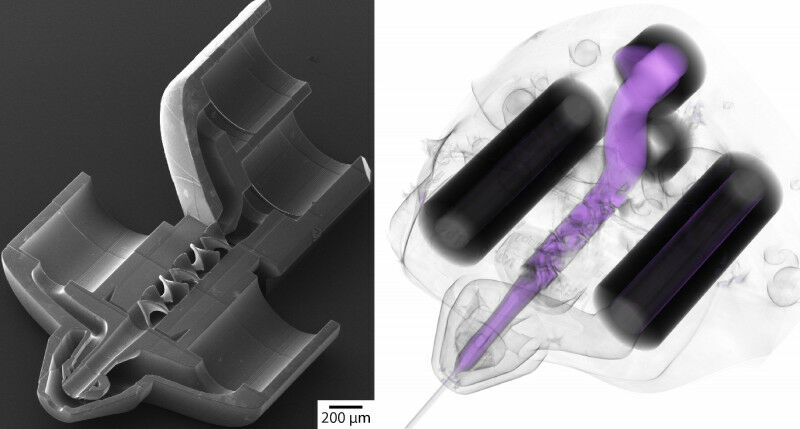
Researchers at the University of Stuttgart develop miniature laboratory the size of the tip of a needle While miniaturization is already well advanced in electrical engineering, analysis and process technology in medicine and biochemistry still fills entire laboratories. Researchers from the University of Stuttgart and the Center for Free-Electron Laser Science (CFEL) in Hamburg have now developed a method which enables a laboratory to be reduced to the size of the tip of a needle. It manages this thanks to short-pulse lasers, photoresist and 3D printing. The method opens up a new era of biomedical applications, both for formulating medicines as well as for minimally invasive operating techniques. The specialist * has reported on it. In the last few years, 3D printing has revolutionized the production of complicated shapes. By using serial application, whereby things are written point by point or line by line, even the most complex components can be created quickly and easily.
TO READ THIS ARTICLE, CREATE YOUR ACCOUNT
And extend your reading, free of charge and with no commitment.