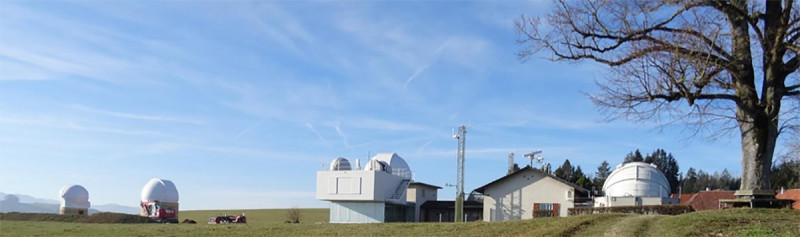
 Swiss Optical Ground Station and Geodynamics Observatory Zimmerwald
Swiss Optical Ground Station and Geodynamics Observatory Zimmerwald © Universität Bern / Université de Bern / University of Bern, AIUB - Researchers at the University of Bern are the first in the world to succeed in determining the distance to a space debris object using a geodetic laser in daylight. The distance was determined on June 24, 2020 at the Swiss Optical Ground Station and Geodynamics Observatory Zimmerwald. The number of measurements can be multiplied thanks to the new possibility of observing space debris during the day. As a result, possible collisions with satellites can be detected at an early stage and evasive maneuvers can be initiated. On the afternoon of February 10, 2009, the operational communications satellite Iridium 33 collided with the obsolete Cosmos 2251 communications satellite over Siberia at an altitude of roughly 800 kilometers. The collision was at a speed of 11.7 kilometers a second and produced a cloud of more than 2,000 pieces of debris larger than ten centimeters. This debris spread out over an extensive area within a few months and has been threatening to collide with other operational satellites since then.
TO READ THIS ARTICLE, CREATE YOUR ACCOUNT
And extend your reading, free of charge and with no commitment.
Your Benefits
- Access to all content
- Receive newsmails for news and jobs
- Post ads