Lighting the way to improved biomaterials
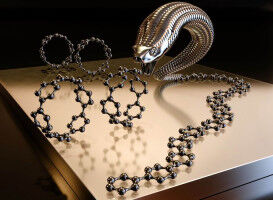
Researchers from McGill University believe that they have found a way to improve the development of biomaterials that could be instrumental in drug delivery, tissue regeneration, nano-optics and nanoelectronics. The team, led by Hanadi Sleiman , Full Professor and Tier 1 Canada Research Chair in DNA Nanoscience in the Department of Chemistry, developed a method inspired by the way nature repairs defective materials in order to create sturdier forms. They used the radiation from a smart phone camera to "relax" DNA-based structures and create life-like materials that can be varied on-demand and be used for various purposes. What questions did you set out to answer? . We were interested in whether it was possible to develop new chemical procedures that could better mimic natural processes and create life-like biomaterials with varied and malleable structures that could be used in materials science and tissue engineering. Nature uses the constant input and transformation of energy to modulate the form and function of its chemical systems. In tissues such as collagen, this energy conversion results in fibres with different properties, leading to variations in their elasticity and robustness.