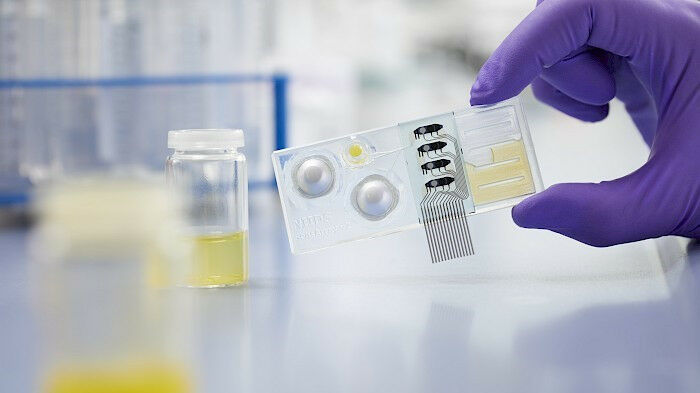
The NIIDS project is developing a digital urine sensor to support rapid disease severity assessment. Photo credit: CSEM.
The NIIDS project is developing a digital urine sensor to support rapid disease severity assessment. Photo credit: CSEM. Swiss TPH is launching a new project on the development of an integrated infectious disease diagnosis and surveillance system (NIIDS) to improve migrant and refugee health. NIIDS will assess healthcare needs of migrants and refugees, as well as set up a platform to support the diagnosis and management of clinically relevant infectious diseases in these vulnerable populations. This will subsequently serve as a ready-to-use diagnostic system for surveillance and disease severity assessment at the primary healthcare level. Despite the effects of the COVID-19 pandemic, global mobility is likely to increase substantially in the near future. People move between countries and regions in search of better opportunities, to escape disasters and conflicts, or because they are displaced.
TO READ THIS ARTICLE, CREATE YOUR ACCOUNT
And extend your reading, free of charge and with no commitment.