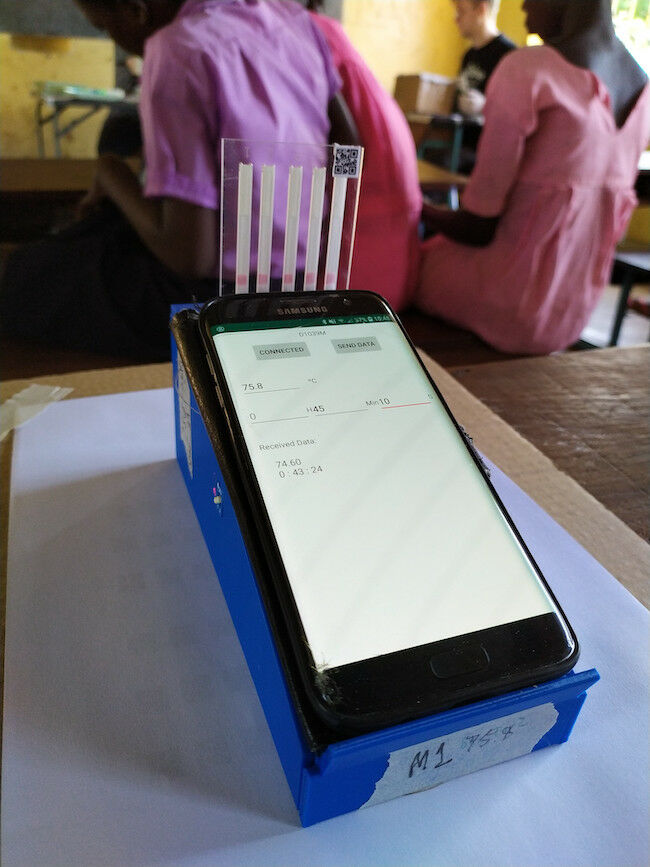
A new approach to tackling the spread of malaria in sub-Saharan Africa, which combines affordable, easy-to-administer blood tests with machine learning and unbreakable encryption, has generated encouraging early results in Uganda. Malaria is one of the world's leading causes of illness and death, sickening around 228 million people each year, more than 400,000 of them fatally. Like COVID-19, malaria can spread asymptomatically, making widespread field testing vital to containing outbreaks and saving lives. One significant challenge for making field testing widely available is that the most common and accurate malaria blood test is based on the polymerase chain reaction (PCR) process. PCR tests require trained staff to draw blood, and laboratory conditions to test the samples. In remote areas of sub-Saharan Africa, malaria infections often break out hundreds of miles away from trained staff and lab conditions, making effective infection control very difficult. While more portable lateral flow tests for malaria have been developed and delivered in recent years, their reliability has been questioned, with some studies suggesting they may be only 75% accurate.
TO READ THIS ARTICLE, CREATE YOUR ACCOUNT
And extend your reading, free of charge and with no commitment.