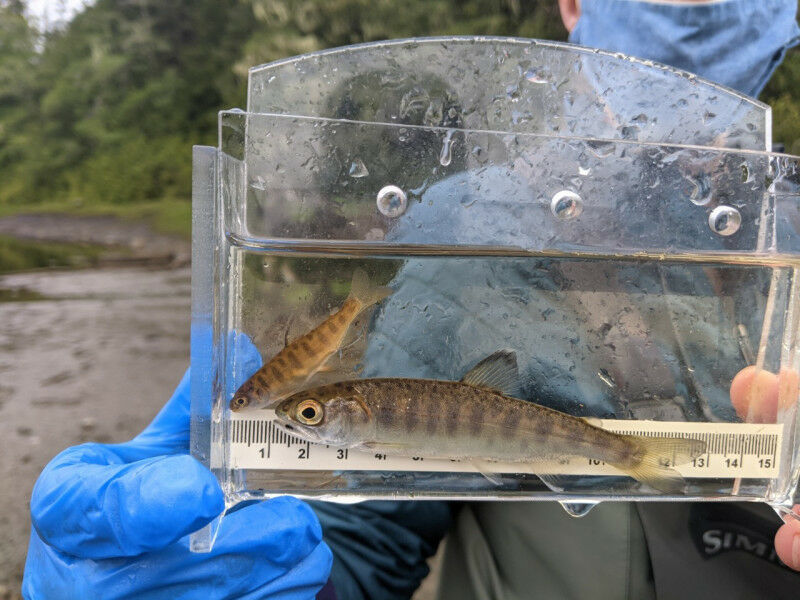
Coho smolt. Photo credit: Julian Gan
Coho smolt. Photo credit: Julian Gan - Study traces 40 years of change on Vancouver Island river-to-sea salmon and trout pathway Researchers from Simon Fraser University's Salmon Watershed Lab have found that recent declines of Pacific salmon and trout are associated with 40 years of changes in their combined marine and freshwater ecosystems. Led by lab researcher Kyle Wilson, the study found that stressors in both environments combine to impact fish resiliency. "It's not just the ocean that is driving declines," says Wilson, a former SFU Banting postdoctoral fellow. "The combination of marine and freshwater stressors effectively 'squeezes' some salmon populations by lowering survival in both the river and the sea." The study, published in the journal Global Change Biology, traces declining numbers in five salmon species found in the Keogh River near Port Hardy on Vancouver Island. The declines were found to coincide with combinations of stressful environmental changes including fluctuating ocean climate, increases in coastal seals and other competing salmon, warmer water temperatures, and increased watershed logging. Lower juvenile salmon survival in rivers, impacted by watershed logging, occurred together with reduced survival of adult salmon due to increased risks from predatory seals and competition with other salmon, both wild and from hatcheries.
TO READ THIS ARTICLE, CREATE YOUR ACCOUNT
And extend your reading, free of charge and with no commitment.