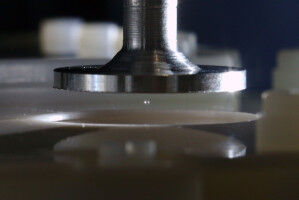
Empa researcher Evgeniia Gilshtein has developed an invisible ’keyhole’: Circuits are placed on a transparent substrate that are barely perceptible to the human eye. Image: Empa
Empa researcher Evgeniia Gilshtein has developed an invisible 'keyhole': Circuits are placed on a transparent substrate that are barely perceptible to the human eye. Image: Empa - Hard times for burglars and safecrackers: Empa researchers have developed an invisible "keyhole" made of printed, transparent electronics. Only authorized persons know where to enter the access code. At first glance, Empa researcher Evgeniia Gilshtein's idea seems inconspicuous - or more precisely, invisible. What initially looks like a simple transparent film conceals a whole new level of security. Invisible buttons are printed with conductive ink on the transparent carrier material, the position of which is known only to insiders. Such circuits can be connected to a door lock as an access code, for instance.
TO READ THIS ARTICLE, CREATE YOUR ACCOUNT
And extend your reading, free of charge and with no commitment.