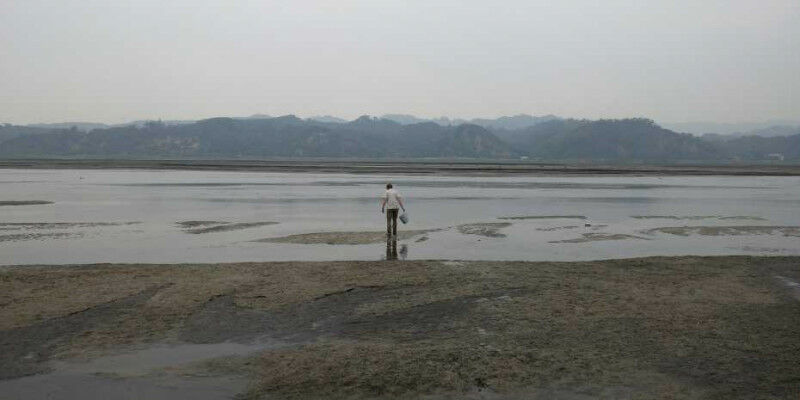
Thomas Blattmann, co-author on the study, is taking a sample at Gaoping River in Taiwan. (Image: Shing-Lin Wang / T. Eglinton / ETH Zurich)
Thomas Blattmann, co-author on the study, is taking a sample at Gaoping River in Taiwan. (Image: Shing-Lin Wang / T. Eglinton / ETH Zurich) - Terrestrial ecosystems help mitigate climate change by absorbing large amounts of carbon from the atmosphere. A new study now confirms that changing climate conditions could reduce this effect because in warmer and wetter areas, carbon stored in the soil is released back into the atmosphere more quickly. Without land ecosystems, our climate would probably be under even greater threat than it already is. Plants and soil currently consume about a third of anthropogenic carbon emitted to the atmosphere, which makes them a key mitigator of global climate change. Soil plays a prominent role here because it stores a large portion of the organic carbon, delaying the latter's return to the atmosphere when plants die. Concerns justified.
TO READ THIS ARTICLE, CREATE YOUR ACCOUNT
And extend your reading, free of charge and with no commitment.