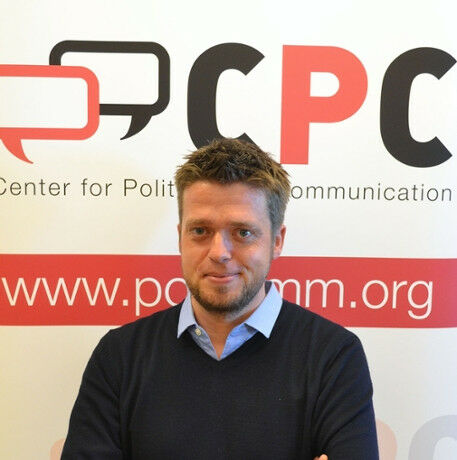
’Linking the problem to possible solutions carries the potential to increase our sense that it matters what we do and that it is in our power to change things’ -communication researcher Andreas Schuck
'Linking the problem to possible solutions carries the potential to increase our sense that it matters what we do and that it is in our power to change things' -communication researcher Andreas Schuck - Alarming news about climate change dominates in news media. And we need to be alarmed, but does negative news alone have the desired effect on people and get them engaged? Or might we also need more of a different form of journalism, one that describes the solutions that are being developed? Communication scientist Andreas Schuck studies the effects of different forms of climate communication and the potential benefit of solutions journalism. In the run up to the climate summit in Glasgow, news media reported a lot about climate change and where we stand. Doom scenarios dominated and what would happen if world leaders would not act now. But what effect does such news have on us, does it get us more involved? And how much of the information in alarming news reports actually sticks with us? 'I sometimes quiz my students in my classes and ask them what they really know about the Paris Agreement', tells communication researcher Andreas Schuck, 'and they know very little even though there is so much talk about it in the news and in public debate.' - News frames matter. In his research Schuck focuses on the communication of complex (political) issues, like climate change, and how this influences public opinion and behaviour. 'With complex issues, like climate change but also EU politics and Covid, people tend to remember little about the often complicated facts and details and seem to a large degree to be led by morals, emotions and individual risk perceptions when forming their opinion', tells Schuck.
TO READ THIS ARTICLE, CREATE YOUR ACCOUNT
And extend your reading, free of charge and with no commitment.