Astrophysicist helps map the origins of the universe
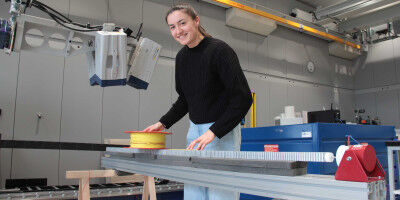
No bigger than a microwave oven, a device designed and built by a University of Miami astrophysicist is helping an international team of astronomers obtain a colossal amount of data on how the universe's so-called dark ages came to an end roughly 400 million years after the Big Bang. Josh Gundersen's 125-pound cryostat, which he partially fabricated at the University's Coral Gables Campus, cools the receiver array of a high-tech radio telescope to 15 degrees above absolute zero, ensuring that the dish will be able to pick up light emitted by galaxies billions of years ago. The cryostat took Gundersen and College of Engineering student Hugo Medrano 18 months to design and engineers another six months to assemble, install, and calibrate at the California Institute of Technology's (Caltech) Owens Valley Radio Observatory (OVRO). It is a critical component of the new CO Mapping Array Project, or COMAP, an initiative that is helping to solve the mystery of what caused the rapid rise in the production of stars in the early universe. Spearheaded by Caltech, COMAP investigates the origin of structures in the early universe that led to the galaxies we observe today, including those that are faint or hidden by dust. Using a 10.4-meter Leighton radio dish, the project measures carbon monoxide (CO) emissions from about 11.5 billion light years away. "CO is the second most abundant molecule in the universe, the first being molecular hydrogen,” said Gundersen, a professor of physics in the College of Arts and Sciences, whose research ranges from the Milky Way to the cosmos to the Big Bang.