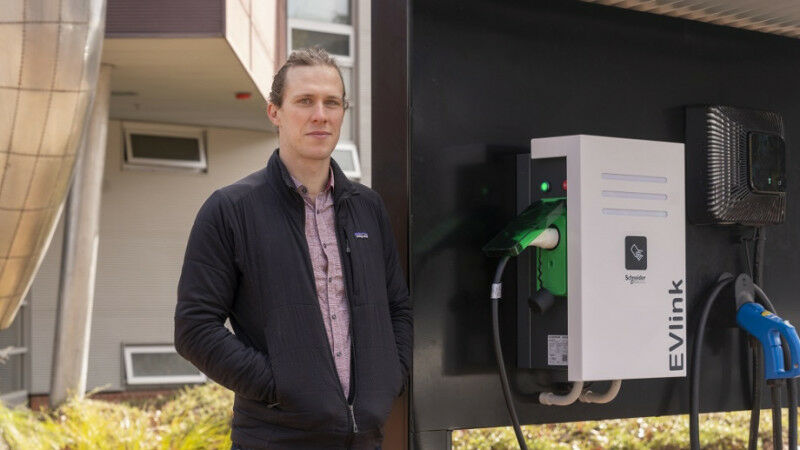
Dr Bjorn Sturmberg. Image: Jamie Kidston/ANU
Dr Bjorn Sturmberg. Image: Jamie Kidston/ANU - Electric vehicles can handle the distances required to travel to essential services in remote and regional Australia, a new study from The Australian National University (ANU) has shown. According to co-author Dr Bjorn Sturmberg, the results indicate the use of electric vehicles in remote communities is more feasible than might be expected. "We analysed the distances between people's homes and the nearest "service hub" towns - where they might go to the do the shopping, for example," Dr Sturmberg, said. "The vast majority of residents, or 93 per cent, could do those trips with even the lower-range of electric vehicles currently available on the Australian market. That's without needing to recharge en route." Dr Sturmberg said given this, there's no excuse for leaving our remote communities out of the discussion. "We need to do better - electric vehicles shouldn't be left in the too hard basket. It's an unequitable and unfair path forward if remote and regional communities are the last ones left driving diesel vehicles, especially as they will be some of the most impacted by catastrophic climate change," Dr Sturmberg said. "Yes the barriers are obvious - large distances, unsealed roads. But the benefits are equally obvious.
TO READ THIS ARTICLE, CREATE YOUR ACCOUNT
And extend your reading, free of charge and with no commitment.