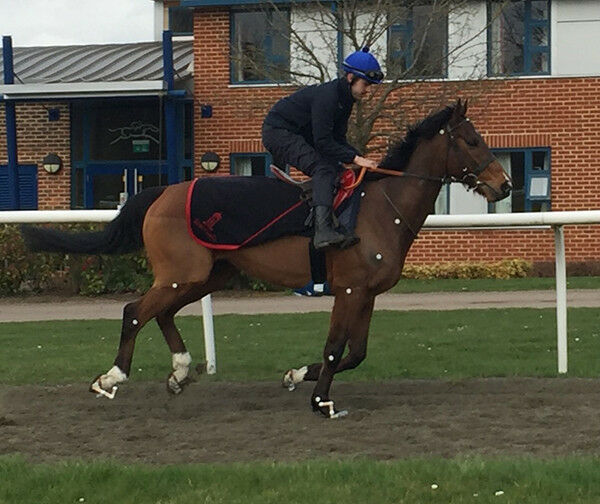
Horse galloping over the artificial training track in GluShus at the British Racing School
Horse galloping over the artificial training track in GluShus at the British Racing School 24 hour contact: 01707 666297 A new study, led by the Royal Veterinary College, and funded by the Horserace Betting Levy Board, has shed light on the influence of horseshoe and surface conditions on racehorses' hoof movements. This has implications for how racehorses' athletic performance and safety can best be supported, both in training and on the racetrack. The findings of this research will be an important step towards helping both the racing industry and farriers understand how different shoeing practices impact horses' movements during high-speed locomotion on different surfaces. Conducting this study, a team of researchers, led by Dr Kate Horan, a Postdoctoral Research Scientist at the RVC, assessed the effect of eight horseshoe-surface combinations on hoof acceleration patterns in 13 retired Thoroughbred racehorses. Hoof accelerations were measured using accelerometers, mounted to the dorsal hoof wall, as the horses trialled aluminium, barefoot, GluShu (an aluminium-rubber composite shoe) and steel shoeing conditions at gallop on turf and artificial surfaces. Linear mixed models were then used to determine whether surface, shoeing condition or stride time influenced maximum or minimum accelerations at hoof landing and during the push-off stage of the horses' stride cycles. Published in Animals , the research found that during hoof landing, accelerations were increased for the hindlimbs and leading limbs.
TO READ THIS ARTICLE, CREATE YOUR ACCOUNT
And extend your reading, free of charge and with no commitment.