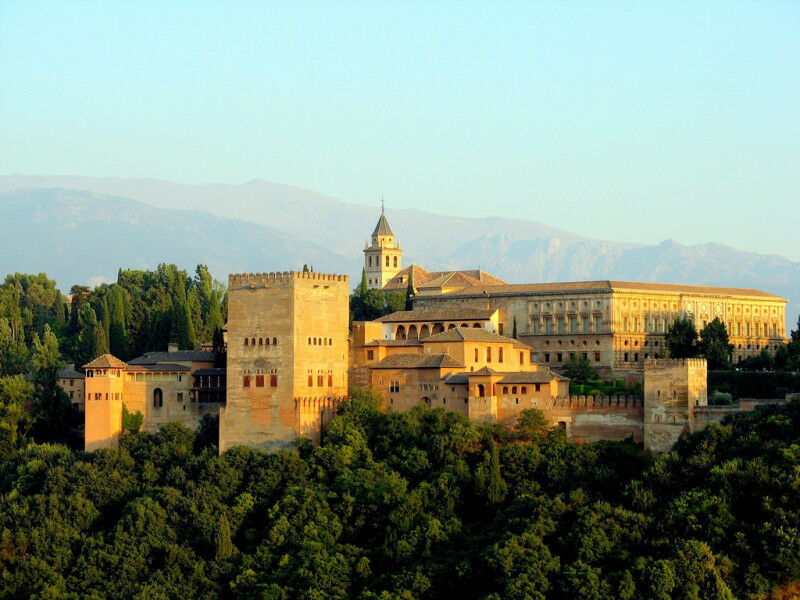
(© Image: Wikimedia) - Scientists have studied the unique features of the decorative vaulting known as muqarnas in Spain's Alhambra palace and fortress complex. Muqarnas are commonly found in Islamic architecture, yet they are poorly understood by the architectural community and the little data that exist on them have been simplified over time. The EPFL study firmly anchors the Alhambra's wonders in our world heritage. Before a building can be properly restored, rebuilt or even maintained, architects need to have a good understanding of how it was constructed and what methods were used. That's especially true for historical monuments with a unique type of architecture, like the Alhambra in Granada, Spain. Ignacio Ferrer Pérez-Blanco and Marie-Pierre Zufferey, two scientists from the Laboratory of Numeric Cultures for Architectural Projects (CNPA) within EPFL's School of Architecture, Civil and Environmental Engineering (ENAC), have studied one of the Alhambra's main architectural features: muqarnas. These three-dimensional structures are made up of dozens of individual elements that can be arranged in an infinite number of ways.
TO READ THIS ARTICLE, CREATE YOUR ACCOUNT
And extend your reading, free of charge and with no commitment.
Your Benefits
- Access to all content
- Receive newsmails for news and jobs
- Post ads