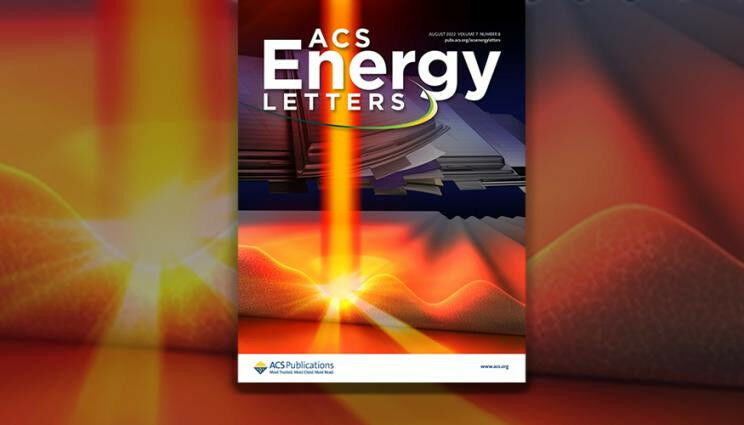
Dense, clean, thin and crack-free garnet-type solid state electrolyte film was obtained by CO2 laser sintering with the assistance of heating stage. The unique anisotropic shrinkage, wave-like surface topology and rapid densification behaviors show great potentials of laser sintering to overcome the long-standing processing challenges of solid-state batteries. Image by Eric Brian Smith/LLNL.
Dense, clean, thin and crack-free garnet-type solid state electrolyte film was obtained by CO2 laser sintering with the assistance of heating stage. The unique anisotropic shrinkage, wave-like surface topology and rapid densification behaviors show great potentials of laser sintering to overcome the long-standing processing challenges of solid-state batteries. Image by Eric Brian Smith/LLNL. Safe, long-cycle-life batteries with high energy density are greatly needed with the rapid growth of electric devices and vehicles and grid energy storage demands. Lawrence Livermore National Laboratory (LLNL) scientists have devised a method for the fabrication of all-solid-state lithium metal batteries, which have been recognized as the future choice of safe and high-energy-density power sources. The team found that sintering (compacting and forming a solid mass of material by heat or pressure without melting it to the point of liquefaction) the solid-state electrolyte films with carbon dioxide (CO2) overcomes the common manufacturing challenges in solid-state batteries. The laser sintering technique yields scalable, low-cost, high-energy-density solid-state lithium (Li) batteries that can advance energy storage needs across national security missions.
TO READ THIS ARTICLE, CREATE YOUR ACCOUNT
And extend your reading, free of charge and with no commitment.